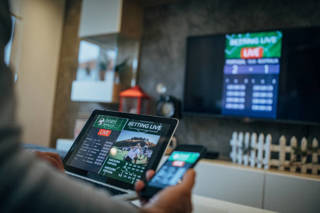
One senior man watches soccer match and bets on the game.
When you watch football, baseball or basketball, the essential contest remains familiar because athletes still make the decisions that determine the result. Technology has changed what surrounds those moments, however, so your phone can deliver scores, statistics, video and market information within seconds. The digital layer grows, but the rules and drama remain rooted in sport today.
You can follow a game from more places than ever because modern networks connect broadcasts, official data and mobile services almost instantly. A stadium spectator, television viewer and phone user can receive varied information, yet each person still follows the same underlying event. Technology thus changes access, convenience and flexibility without rewriting the competition itself today directly.
From pregame choices to live markets
The clearest change concerns betting during a game, which regulators describe as in-play or in-running wagering. The term “in-play” or “live betting” describes placing a wager while a sporting event is taking place, so technology must respond as events unfold. Prices can move after goals, turnovers or injuries, keeping digital activity closely connected to the live action.
This requires fast data transmission, automated market management and reliable connectivity because a short delay can matter when an event changes quickly. The Gambling Commission notes that broadcast latency can create differences between people watching at a venue, on television or through online streams. Your screen then becomes part of an information chain surrounding the game today.
Official data feeds connect sport to screens
Modern sports platforms depend on information moving from leagues to broadcasters, apps and betting operators at high speed. In 2026, the NFL extended its partnership with Genius Sports, remaining its exclusive distributor of real-time official play-by-play statistics, Next Gen Stats and official sports wagering data. That infrastructure helps digital services update information as contests develop today.
For you, the technology often feels invisible because a score or player statistic simply appears on your screen. Behind that update sit data feeds, distribution agreements and technical systems designed to move information quickly. The NFL says Genius Sports’ data reaches more than 98% of the legalized US sports wagering market, showing how data is embedded overall.
Your phone becomes the viewing hub
Your smartphone can function as a sports control room because a device can combine scores, statistics, streaming information and betting services. This convenience changes how you follow a contest, as you can move between sources without leaving the game. The result is an experience where information arrives, with information arriving beyond halftime or the whistle now.
Location technology adds a layer because regulated wagering must follow the laws of the jurisdiction where you are physically located. Geolocation systems can verify that location before an online wager is accepted, so operators can apply state-specific rules. You might never notice that process, but it sits underneath opening an app and following a live game online.
More information creates more markets
Technology has increased the amount of detail surrounding a sporting event. A football game can generate markets connected to player statistics, individual plays or phases, as golf can produce live information around individual holes. That expansion means betting can follow the structure of a game more closely because digital systems can process events in real time today.
The NFL’s data partnership supports products such as player props, micro-betting and same-game parlays, so markets can extend well beyond the final score. For you as a fan, that can make individual moments feel more detailed today. The point is that these markets sit around the competition because players still perform under the same sporting rules today.
Speed changes how you experience a game
Faster networks alter live viewing because information can travel from an event to your screen quickly. A touchdown, goal or three-pointer in sport can trigger score updates, statistics and betting market movements quickly, so your phone becomes synchronized with the broadcast. That speed creates a different rhythm, even though the action itself follows the same pace overall now.
There is also a limit to that immediacy because broadcasts can contain delays. Live sports coverage can reach viewers at slightly different times depending on the platform, connection and broadcast method, meaning one viewer could receive current information before another. Betting ultimately depends on the speed and quality of information reaching each participant, not simply on what happens during the game online.
The future adds layers around the sport
The direction is toward connected platforms because companies can combine sports viewing, information, commerce and wagering services within one digital account. In September 2026, Fanatics launched the Sports & Casino app, bringing sportsbook, casino and prediction-market products together while adjusting availability according to user location and local rules. The sports themselves remain separate from those services today.
For you, that distinction matters because technology can make a game easier to follow without changing qualities that make it compelling. Athletes still need skill, coaches make tactical decisions and results still depend on competition. Technology around betting adds information around those moments, so the future looks more like an expanding digital layer around sport today.
About the Author